AT A GLANCE
Effective flag football tournament preparation means arriving fresh, organized, and ready to repeat your game plan across several matches, not training hard until the last minute.
- Review the organizer’s rules, schedule, field dimensions, roster limits, and tie-breakers at least 7 days before the event.
- Use 2 to 3 focused sessions in the final week, then reduce volume while keeping short bursts of speed and skill work.
- Prepare for repeated efforts with routes, flag pulls, accelerations, and changes of direction rather than long-distance running alone.
- Pack food, fluids, spare clothing, flags, tape, and medical supplies before tournament morning.
The format, weather, number of games, and time between matches determine how much conditioning and recovery your team needs.
How Should You Understand the Tournament Format, Rules, and Schedule?
Start by turning the event information into a simple team document. Record the arrival time, check-in procedure, field number, game duration, roster rules, substitutions, scoring system, overtime procedure, and qualification format.
- Confirm whether the tournament uses 5-on-5, 7-on-7, or another format.
- Check the permitted flag belt, ball size, cleats, gloves, mouthguards, and jewelry rules.
- Write down the time between games and identify the first possible elimination or playoff match.
- Verify how standings are decided, including points difference, head-to-head results, or total points scored.
- Ask the organizer how weather delays, cancelled games, and tied playoff matches are handled.
Rules differ between youth, amateur, school, and international competitions. The Fédération Française de Football Américain (FFFA) publishes the rules used in its competitions, while an event organizer may add local regulations, so your team should use the tournament’s official rulebook as the final reference.
Build a schedule that includes travel, meals, warm-ups, team meetings, and recovery. A team that arrives at the field without knowing its next meeting point can lose preparation time before the opening game.
How Does Flag Football Tournament Preparation Build a Training Plan?
A tournament plan should sharpen execution without creating fatigue. In the final 7 to 10 days, keep practices specific and intense in short blocks, avoid unfamiliar exercises, and place the last demanding session far enough from competition for players to recover.
For a recreational or amateur team, 60 to 90 minutes per practice is usually enough to cover skills, tactics, speed, and a controlled scrimmage. A qualified strength and conditioning coach should adjust volume for younger players, athletes returning from injury, or teams facing a tournament with an unusually high game count.
How Do You Prioritize Flag Football Fundamentals?
Fundamentals deserve the largest share of practice because tournament pressure reduces the time available to correct technical errors. Train the movements that decide short plays: clean snaps, secure catches, route depth, efficient flag pulls, pursuit angles, and legal positioning.
- Run catching drills from multiple angles, including low, high, and behind-the-body passes.
- Practice route spacing with landmarks so receivers do not occupy the same corridor.
- Repeat flag pulls at walking speed first, then at game speed with controlled contact.
- Give quarterbacks a defined read progression and a clear check-down option.
- Finish each practice with short competitive periods that reward correct technique, not only touchdowns.
Keep repetitions short enough to preserve quality. Five technically clean repetitions are more useful than a long drill in which players stop communicating and lose body control.
How Should You Add Conditioning, Speed, and Agility Work?
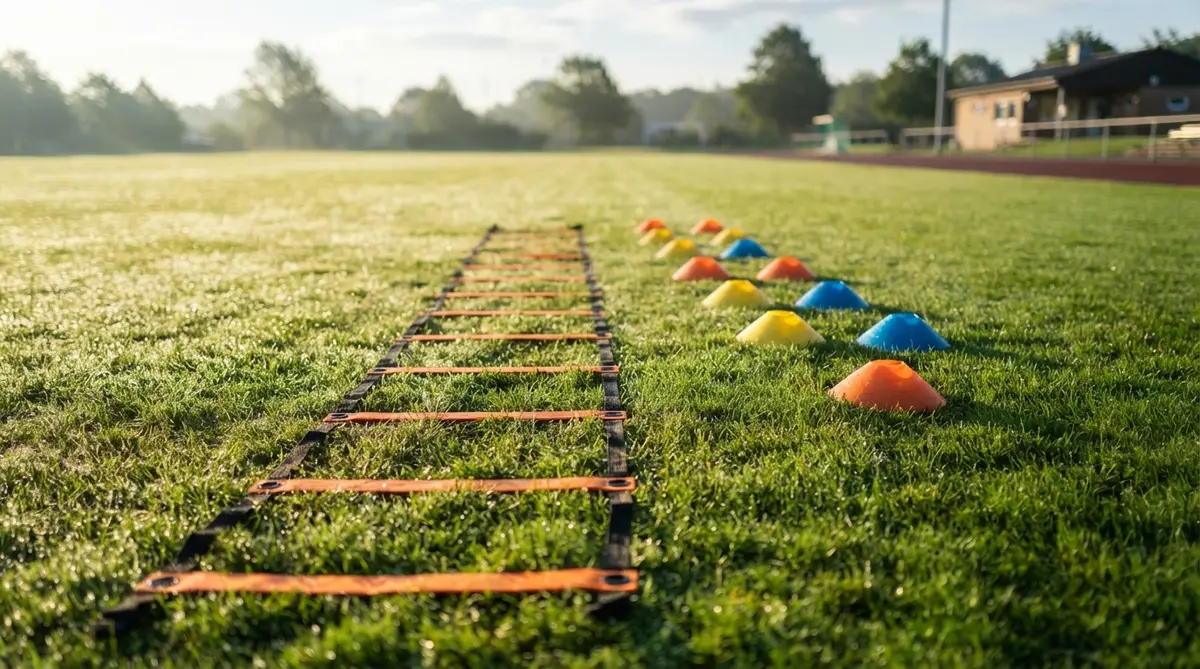
Flag football conditioning should resemble the sport’s repeated accelerations, decelerations, cuts, and brief recovery periods. Use 5 to 20 m sprints, lateral shuffles, reaction drills, and change-of-direction work instead of relying only on continuous running.
A practical block can include 6 to 10 repetitions of a 10 m acceleration, 4 to 6 change-of-direction efforts, and full recovery between high-quality sprints. Stop the drill when mechanics deteriorate, because tired cutting increases technical errors and may raise injury risk.
Players who need additional off-field work can follow an offseason workout plan for power and speed, but the final tournament week is not the time to test a new maximum lift or unfamiliar plyometric routine.
When Should You Schedule Scrimmages and Recovery Days?
Schedule the last full-intensity scrimmage 3 to 5 days before the tournament when possible. Use the final 1 to 2 days for brief walk-throughs, passing rhythm, special situations, mobility, and communication.
- Early week: technical work, acceleration, and position-specific repetitions.
- Middle of the week: offensive and defensive situations, then a controlled scrimmage.
- Final 1 to 2 days: short practice, play-call review, and low-fatigue movement.
- Tournament eve: normal meal timing, equipment check, and sufficient sleep.
Do not turn recovery into complete inactivity if players feel well. Easy walking and light mobility can maintain routine, while pain, swelling, dizziness, or a suspected concussion requires removal from play and assessment by an appropriate medical professional.
How Do You Prepare Your Team’s Strategy and Roles?
Assign responsibilities before the event so players can make decisions without waiting for the coach. Your plan should define the primary quarterback, center, route concepts, rush responsibilities, flag-pull assignments, substitutions, and emergency replacements.
How Should You Assign Positions and Responsibilities?
Build a depth chart with at least one backup for every essential role. In amateur teams, players may cover several positions, but they should know which role has priority in each personnel group.
- Quarterback: identify the first read, check-down, and clock situation.
- Center: establish snap count, release direction, and protection communication where applicable.
- Receivers: know route depth, spacing landmark, and adjustment against zone coverage.
- Rushers: understand legal rush timing and the quarterback’s escape direction.
- Defenders: assign deep help, underneath zones, man coverage, and the primary flag-pull angle.
Keep the playbook compact. A small menu of plays that every player can execute is more reliable than a large menu that depends on perfect memory.
Which Offensive and Defensive Situations Should You Practice?
Practice the situations most likely to appear when fatigue and time pressure affect decisions. Run short scenarios rather than repeating only open-play formations.
- Third or fourth down with limited space to gain.
- Goal-line offense and defense from both sides of the field.
- Two-minute possessions and plays that stop or preserve the clock.
- Red-zone coverage against bunch or stacked receiver formations.
- Final-play situations, penalties, turnovers, and a sudden-death or overtime format if the rules allow it.
NFL FLAG rules and FFFA regulations can differ on rush lines, downs, scoring, and overtime. Have the coach or captain explain the exact tournament rule before practicing each situation.
How Can You Develop a Simple Game Plan?
Choose 2 to 4 core offensive concepts and 2 to 3 defensive calls for the opening games. Add one adjustment for a heavy rush, one for zone coverage, and one for a fast opponent.
Scout only what your team can use. Note an opponent’s quarterback preference, receiver alignment, rush timing, and defensive depth, then communicate one actionable adjustment at halftime instead of overwhelming players with statistics.
How Do You Strengthen Communication and Team Chemistry?
Team chemistry improves when communication has a shared vocabulary and a clear purpose. Decide on calls for motion, coverage changes, substitutions, timeout use, and defensive switches before the tournament.
- Use the same words for formations, routes, coverage, and rush assignments in every practice.
- Run a 10-minute team meeting after practice to identify one successful habit and one correction.
- Pair newer players with experienced teammates for equipment checks and rule questions.
- Rotate a player-led communication role so the team does not depend on one voice.
- Set a sideline rule: one coach gives tactical instructions while other staff manage substitutions, water, and logistics.
Keep feedback specific and immediate. “Call the switch earlier” gives a player something to change, while general criticism does not improve the next snap.
How Should You Plan Equipment, Nutrition, and Recovery?
Prepare supplies for the whole day, not only for the opening game. A written packing list reduces avoidable problems such as missing flags, wet clothing, or insufficient food between matches.
What Essential Equipment and Tournament Supplies Should You Pack?
Pack one personal bag per player and one team logistics bag managed by the coach. Check equipment the evening before departure.
- Approved flag belts, spare flags, footballs, cones, pump, and measuring tool if permitted.
- Cleats suited to the surface, indoor shoes if relevant, mouthguard, gloves, and layers for changing weather.
- Water containers, coolers, ice packs, sunscreen, shade, towels, and spare socks.
- Roster, waivers, emergency contacts, tournament schedule, rulebook, phone chargers, and payment documents.
- Basic first-aid supplies, but no player should return after a significant injury without appropriate evaluation.
Field conditions should change your footwear and warm-up plan. Wet grass, artificial turf, heat, and cold each affect traction, grip, clothing, and hydration needs.
How Do You Fuel and Hydrate Between Games?
Use familiar meals and snacks that provide carbohydrates, moderate protein, and fluids. Avoid experimenting with supplements, energy drinks, or unusually large meals on tournament day.
Eat a normal pre-game meal 2 to 4 hours before playing, then use smaller snacks during the day when the schedule is tight. Options can include fruit, sandwiches, yogurt, cereal bars, or other foods the player has already tolerated in training.
Water should be the foundation of hydration. ANSES, the French Agency for Food, Environmental and Occupational Health and Safety, advises adapting fluid intake to activity, heat, and individual needs, so coaches should provide regular access to drinks rather than impose one identical volume on every athlete.
For longer or hotter events, a sports drink may help replace carbohydrate and electrolytes, but its use depends on duration, sweat loss, weather, and tolerance. You can compare isotonic drinks and electrolyte products before deciding what belongs in the team cooler.
Why Should You Prioritize Sleep and Injury Prevention?
Sleep supports attention, decision-making, and physical recovery. Keep the final evening predictable, limit late travel where possible, and aim for a normal night rather than trying to compensate with an unusually long sleep.
Players should report persistent pain, swelling, unusual fatigue, dizziness, breathing difficulty, or concussion symptoms to the coach and a healthcare professional. A coach should not diagnose an injury or decide alone that an athlete is fit to return.
How Do You Use a Tournament-Day Checklist?
A checklist turns preparation into repeatable actions. Assign each task to a named person and set a deadline before the first game.
How Should You Organize the Pre-Game Warm-Up and Mental Preparation?
Begin the warm-up 25 to 35 minutes before kickoff, adjusting for weather and organizer requirements. Progress from easy movement to sport-specific speed without exhausting players.
- General movement and mobility for 5 to 8 minutes.
- Acceleration, lateral movement, and controlled changes of direction.
- Passing, catching, snaps, routes, and flag pulls at increasing speed.
- A short review of the opening offensive and defensive calls.
- One breathing routine or communication cue that players can repeat before the first snap.
Warm-ups should raise readiness, not create soreness. The International Olympic Committee and sports performance guidance used by INSEP support progressive preparation and load management, but the exact routine should match the athlete’s age, training history, and medical status.
What Should You Do Between Games?
Leave the field, drink, eat a familiar snack, change wet clothing, and review only the most relevant adjustment. A 10 to 15-minute debrief is usually enough before players need to recover and prepare for the next game.
- Record the score, penalties, turnovers, missed assignments, and successful calls.
- Identify one opponent tendency or one team correction for the next match.
- Use light walking and mobility instead of long static stretching immediately after intense play.
- Keep players in shade or shelter when heat, cold, rain, or wind affects comfort and concentration.
Do not let every player deliver a separate tactical opinion. The coach and captain should publish one clear adjustment, then return attention to hydration, food, and the next warm-up.
Which Final Coach and Player Checks Matter Most?
Complete the final check before leaving the team area and again before each game. The coach should confirm logistics while players confirm personal readiness.
- Roster, waivers, game time, field location, and referee instructions confirmed.
- Flags, footballs, footwear, mouthguards, uniforms, and spare clothing ready.
- Players have eaten, drunk, used the bathroom, and reported any symptom or limitation.
- Opening calls, substitutions, coverage responsibilities, and sideline communication reviewed.
- Next meeting point and departure time announced to every player and parent or guardian where applicable.
For a full-season perspective, connect the tournament block to an annual sports training plan. That prevents one weekend from dictating the workload for the entire amateur season.